

Start building with specs, not boilerplate
Prompt-driven development is fast to start and slow to finish. Spec-driven development defines intent before implementation, so the AI generates code that solves the right problem, not the first interpretation of your prompt.
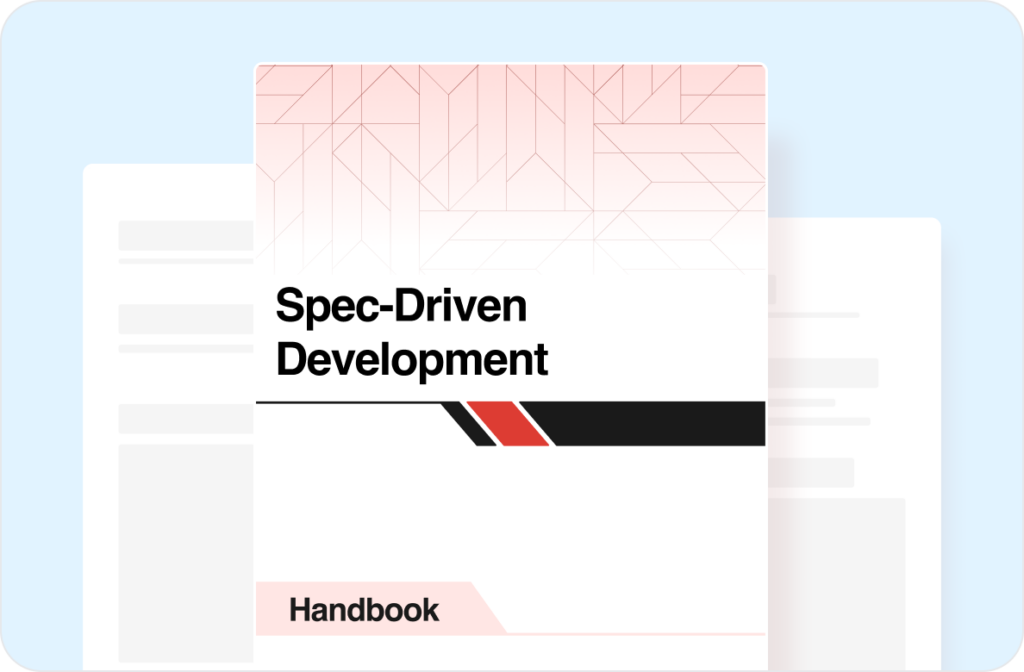

Built by Syncfusion. Trusted by 41,000+ enterprises.
25+ years of developer tools, now reimagined for the agent-first era.


What is spec-driven development?
Spec-driven development defines requirements and technical decisions before coding, enabling reliable, scalable AI-assisted workflows with BoldCreate structured approach.
View DocumentationWhy AI coding fails without planning?
AI coding can become inconsistent without planning. Spec-driven development aligns requirements, architecture, workflows, specifications, and validation before implementation.

Context decay creates inconsistent outputs
AI coding conversations lose context over time, causing requirements, constraints, and edge cases to drift away from the original intent. Structured specifications preserve implementation context across workflows and development cycles.

Hidden decisions create architectural drift
When planning is skipped, implementation decisions happen silently inside the code. Different components solve the same problems differently, creating inconsistent workflows and difficult-to-maintain systems.

Missing specifications lead to unreliable code
AI models are effective at generating code patterns, but they cannot reliably infer security rules, system constraints, error handling, or architectural boundaries without explicit specifications.

Unstructured workflows cause spec drift
Without written contracts, implementations evolve independently from the original requirements. Features expand unexpectedly, edge cases get missed, and future contributors must reverse-engineer intent directly from the codebase.

Lack of planning leads to expensive rework
Spec-driven development resolves ambiguity before implementation begins. Requirements, workflows, validation, and architecture stay aligned throughout the development lifecycle, reducing costly production rework later.
How spec-driven development works
Spec-driven development turns vague ideas into structured workflows that keep requirements, architecture, tasks, validation, and implementation aligned throughout the development lifecycle.
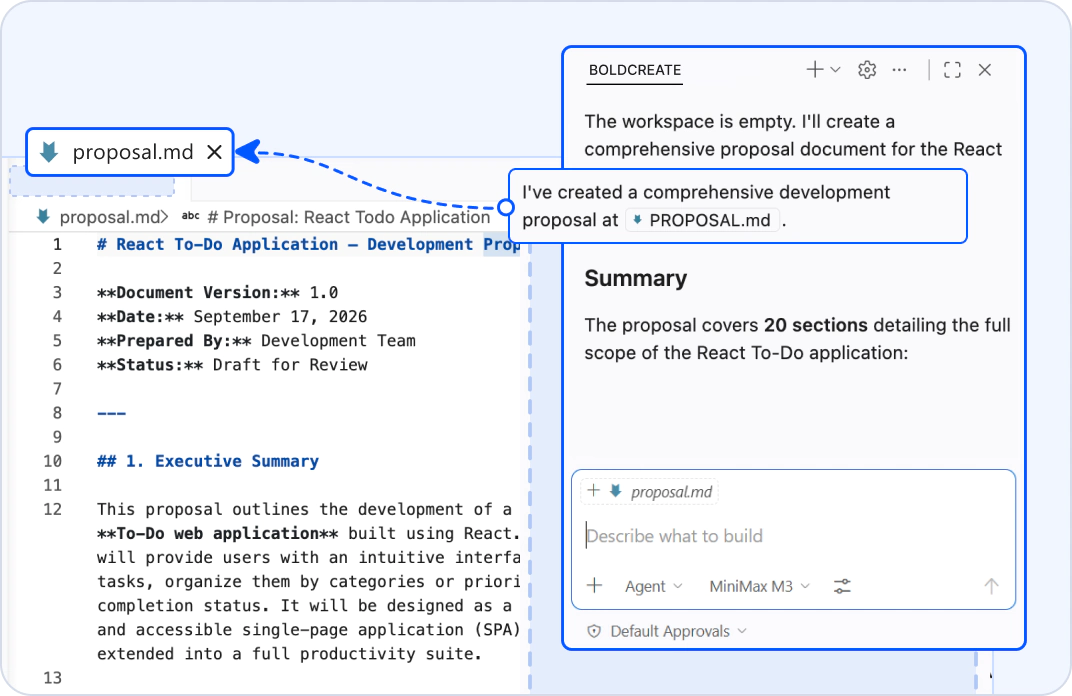
Define the problem
Start with a proposal that identifies the user problem, scope, constraints, and success criteria before implementation begins. This prevents unclear requirements and uncontrolled scope expansion.
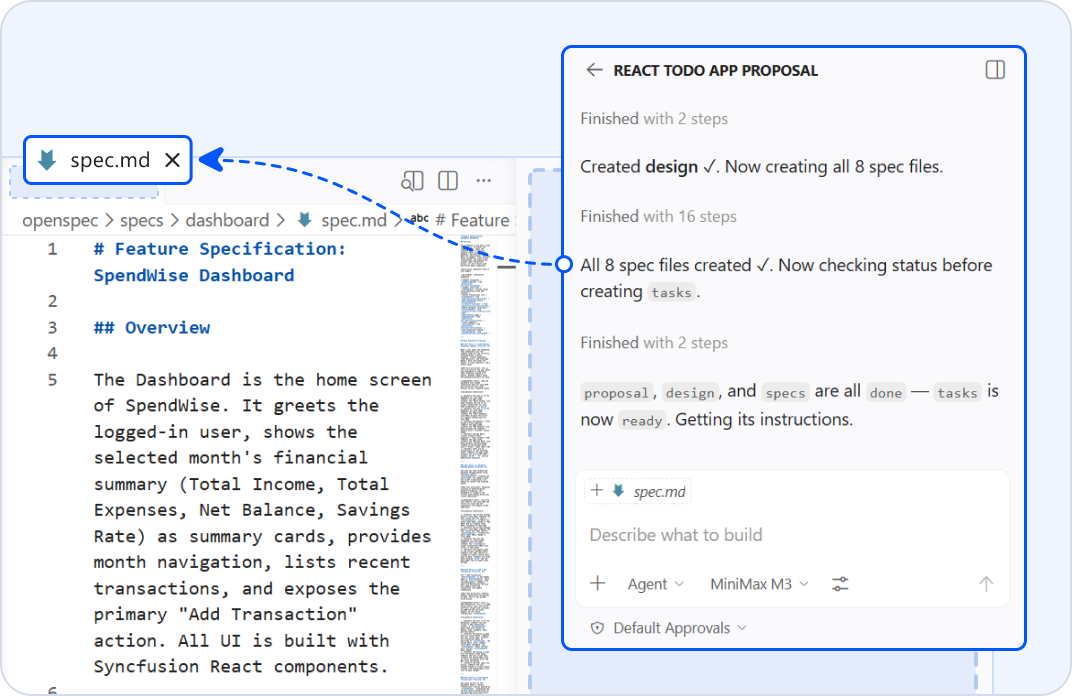
Convert intent into specifications
Create structured specifications that define requirements, scenarios, behaviors, and constraints. Specs become the contract between intent and implementation.
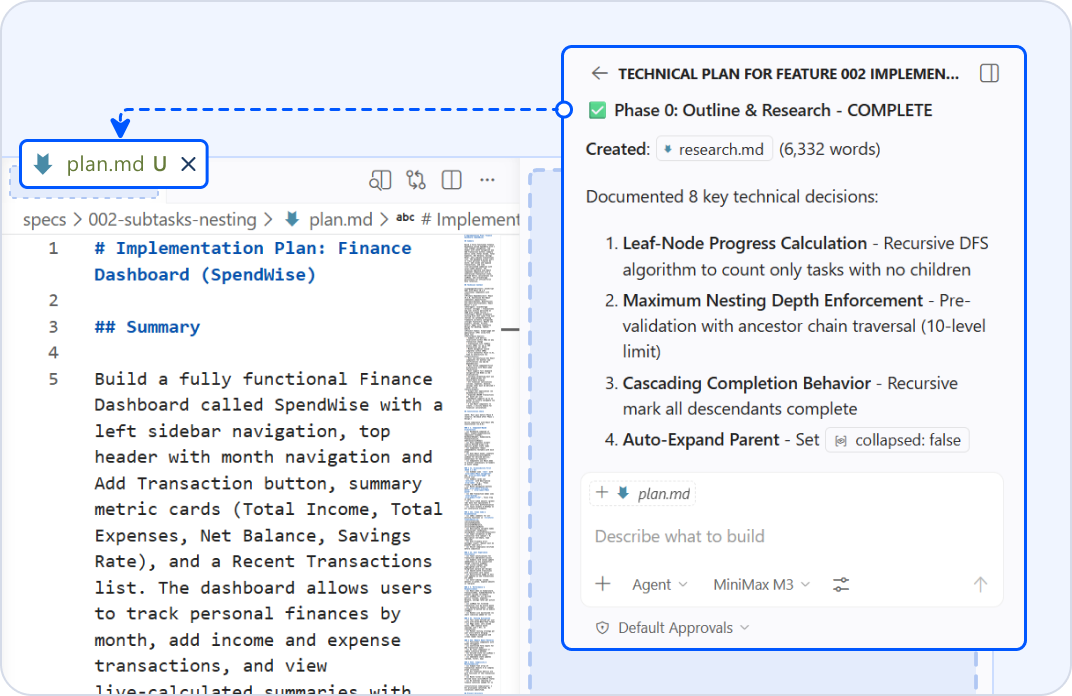
Plan the architecture
Define the technical approach, system boundaries, data models, contracts, error handling, and testing strategy before code generation starts.
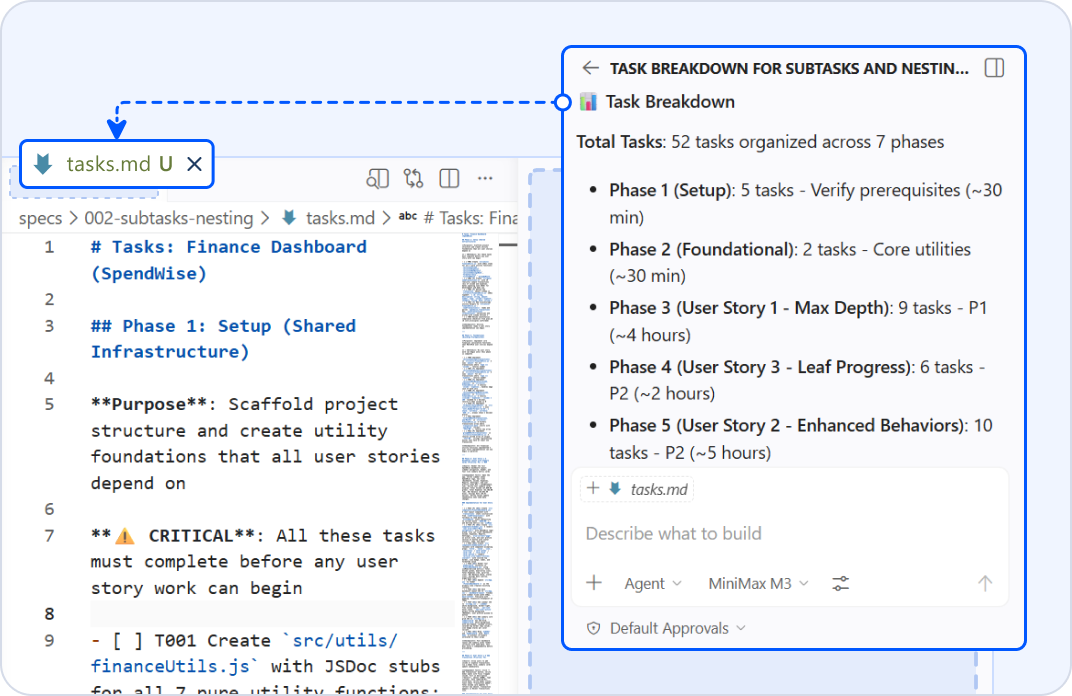
Break work into tasks
Transform plans into dependency-aware tasks with clear completion criteria, implementation boundaries, and execution order.
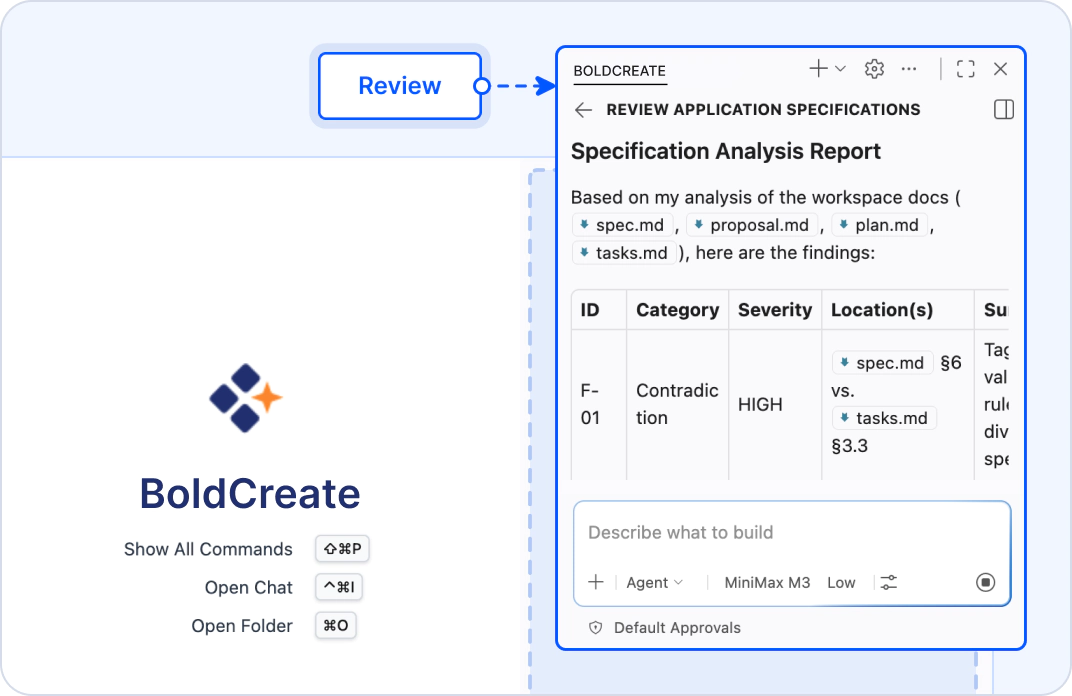
Review before implementation
Validate specs, plans, and tasks before building. Catch ambiguities, missing edge cases, and architectural inconsistencies early.
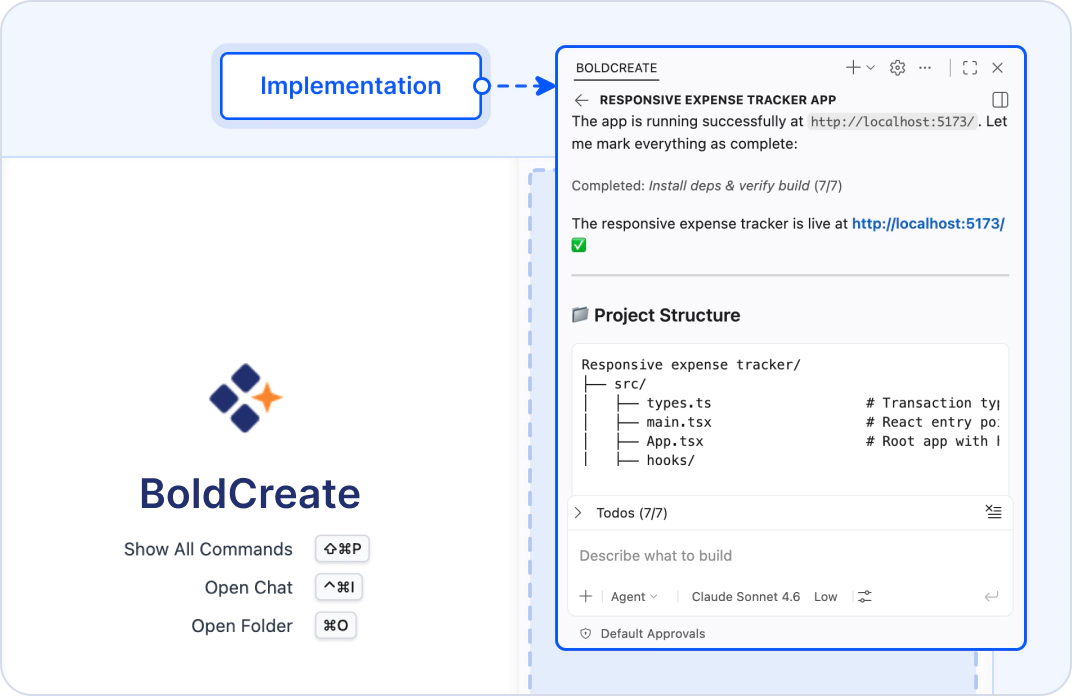
Build against the specs
Implementation follows approved specifications and tasks. Any new discovery updates the artifacts first instead of silently changing the codebase.
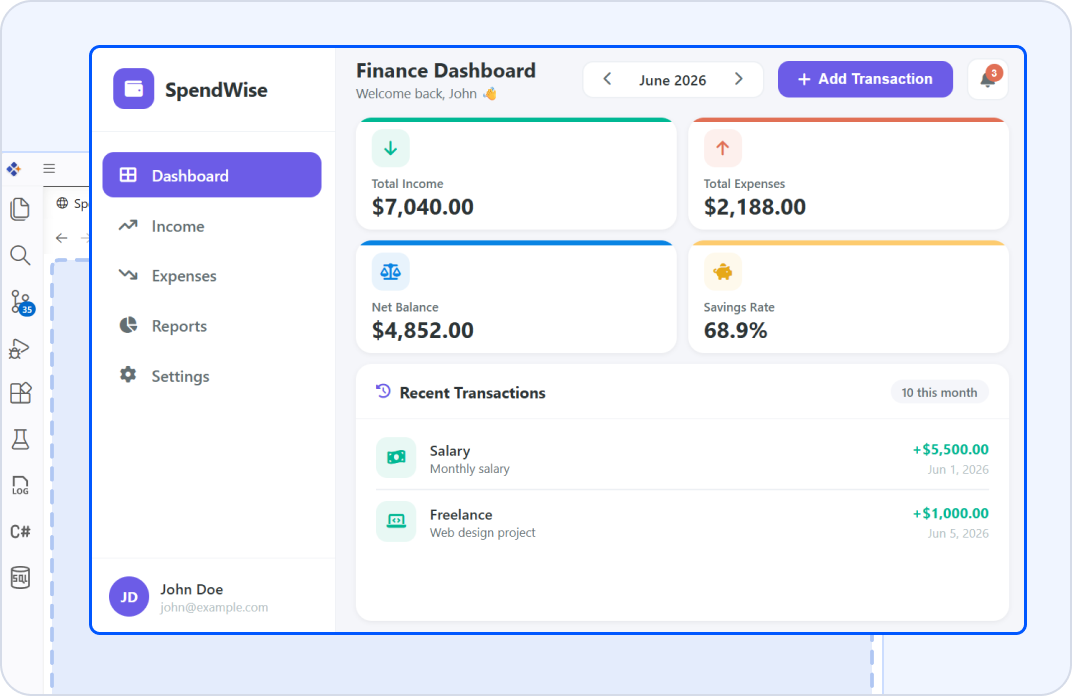
Validate and deploy
Every scenario is validated against evidence, reviewed for traceability, and verified before deployment and production rollout.
Build with architecture, not boilerplate
AI-generated code moves fast, but scalable software needs structure and consistency. Spec-driven development uses reusable specifications, validation, and architecture-aware planning.

Reduce rework by resolving requirements, workflows, and validation rules before implementation begins.

Keep AI-generated workflows consistent across components using shared specifications and implementation standards.

Scale development with reusable project context, structured workflows, and dependency-aware execution.

Align specifications, implementation, and validation to prevent architectural drift throughout the builds.

Build reliable AI-assisted systems with traceable workflows, reviewable changes, and controlled execution.
Spec-driven development vs. prompt-driven coding
Spec-driven development uses structured specifications, planning, and validation, while prompt-driven coding relies on conversational prompts that can cause context loss and architectural drift.
| Aspect | Spec-Driven Development | Prompt-Driven Coding |
|---|---|---|
| Workflow structure | Uses proposals, specifications, planning, tasks, and validation before implementation. | Relies on iterative prompts and conversational code generation. |
| Architecture consistency | Architecture decisions are documented and enforced before coding starts. | Architecture evolves during implementation and may become inconsistent. |
| Context management | Specifications preserve requirements and workflow context across development cycles. | Context can decay as conversations grow longer or prompts change. |
| Change management | Specifications and plans are updated before implementation changes occur. | Changes are often applied directly to the code without workflow alignment. |
| Validation process | Requirements and outputs are reviewed and validated before deployment. | Validation typically happens after implementation and may be inconsistent. |
| Reliability | Produces traceable, maintainable, and architecture-aware workflows. | Can create unpredictable outputs and implementation drift over time. |
| Best use case | Complex systems, scalable workflows, and long-term AI development. | Rapid prototyping and short-term coding tasks. |

Developers
Build faster with AI—generate, refactor, and ship code with confidence in front-end, back-end, and full-stack workflows.
Explore More
Engineering teams
Collaborate seamlessly using shared specs, parallel AI agents, and consistent workflows across projects.
Explore More
Tech leads
Standardize development practices, accelerate onboarding, and keep teams aligned with spec-first execution.
Explore More
Enterprise architects
Enforce architecture, security, and governance while maintaining full control over AI usage.
Explore MoreBuild Reliable AI Workflows with Spec-Driven Development
Create structured AI development workflows with reusable specifications, architecture-aware planning, and reliable implementation in BoldCreate.